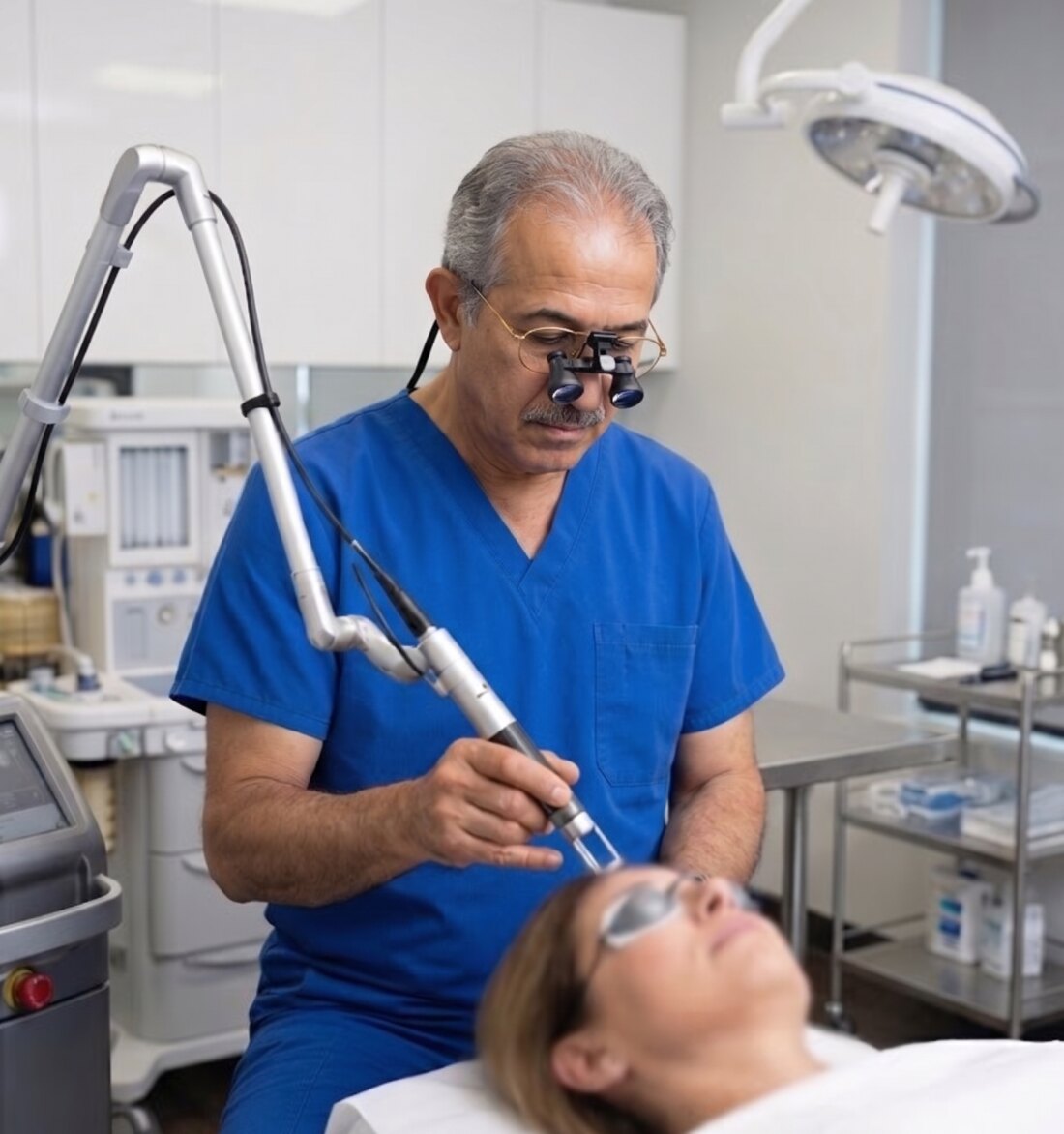
Restoring eyebrow hair lost to overplucking, scarring or thinning, using fine single grafts placed to follow the natural direction of brow growth.
About the procedure
What this procedure involves
An eyebrow transplant uses fine single-hair FUE grafts, usually taken from the nape of the neck or behind the ears, to rebuild brows that have thinned through overplucking, scarring, age or other causes. Dr Jassim Daood performs eyebrow transplantation at the Bankstown clinic in Sydney, placing each graft to follow the natural direction and angle of brow growth.
Recovery
The brow area may be red, swollen or crusted for the first days. Transplanted hairs commonly shed in the first weeks, with regrowth developing over the following months. Once established, the hair usually grows longer than natural brow hair and needs regular trimming.
In depth
More about this procedure
Detailed information about this procedure. Select a section to read more.
An eyebrow transplant may be considered where brow hair has thinned or stopped growing back after years of plucking or waxing, where scarring has left gaps, or where brows have become sparse with age. Some medical causes of brow loss need investigation or treatment first, so the cause is always assessed before surgery is discussed.
Suitability also depends on having enough fine donor hair, usually taken from the nape or behind the ears, where hair is closest in calibre to brow hair.
Eyebrow transplantation is among the most delicate FUE work. Single-hair grafts are placed at a very flat angle, following the way brow hair changes direction across the brow: upward near the nose, flatter along the arch, and downward at the tail.
The shape is drawn and agreed with you before the procedure begins. The work is done under local anaesthetic as a day procedure, and the number of grafts depends on how much of the brow is being rebuilt.
The brow area may be red, swollen or crusted for the first days, and specific aftercare instructions are provided. Transplanted hairs commonly shed in the first weeks before regrowth begins.
Because the grafts keep some scalp-hair behaviour, transplanted brow hair usually grows longer than natural brow hair and needs regular trimming, and sometimes light training with grooming. This ongoing maintenance is part of the informed decision.
Common questions
Frequently asked questions
Yes. Because the grafts come from the scalp area, the hairs usually grow longer than natural brow hair and need regular trimming. This ongoing maintenance is discussed before any decision is made.
Sometimes, depending on how long the follicles have been dormant and whether they are still viable. The cause of your brow loss is assessed first, and a transplant is only discussed if it is actually appropriate.
The shape is drawn on and agreed with you at the consultation and again before the procedure, taking your natural brow line and preferences into account.
The procedure is performed under local anaesthetic. Afterwards the area may be tender, red or crusted for a short period, and aftercare instructions are provided.