
Diet and Hair Health: What the Evidence Actually Shows
Let us start with the part that gets glossed over in most articles on this subject.
Diet does not reverse pattern hair loss. Androgenetic alopecia is caused by inherited follicular sensitivity to a hormone. No food, supplement or eating pattern changes that sensitivity, and anything marketed as a nutritional solution to pattern baldness is selling you something that does not work.
What nutrition genuinely does is support the hair you have, and correct deficiencies that are causing shedding independently of any genetic process. That is a narrower claim, but it is a real one, and for some people it matters a great deal.
What nutrition can and cannot do
It can correct a deficiency that is itself causing hair shedding. Iron deficiency in particular is a well-recognised contributor, and correcting it can resolve the shedding it was causing.
It can support the raw material requirements of hair growth. Hair is largely protein, and follicles are among the most metabolically active tissues in the body.
It cannot slow or reverse pattern hair loss driven by DHT sensitivity.
It cannot regrow hair from follicles that have been lost.
It cannot improve on adequacy. If your levels are normal, supplementing does not push them into a better-than-normal state for hair. Some nutrients cause problems in excess.
That last point is the one most often ignored, and it is why blood tests matter more than supplements.
Iron
The nutrient with the clearest link to hair shedding.
Iron is required for the rapid cell division that growing follicles depend on. Deficiency is associated with diffuse shedding, and it is common, particularly in women of reproductive age, vegetarians and vegans, endurance athletes, and anyone with heavy menstrual bleeding or a history of gastrointestinal blood loss.
The measure that matters is usually ferritin, which reflects stored iron, rather than haemoglobin alone. It is entirely possible to have normal haemoglobin with depleted ferritin, and to be shedding as a result.
There is ongoing discussion in the literature about what ferritin threshold is relevant for hair specifically, with some authors suggesting hair may be affected at levels above the cut-off for anaemia. This is a question for your GP with your results in front of them.
Two cautions. Correcting a genuine deficiency helps. Supplementing without a deficiency does not, and iron overload carries real risk including liver damage. Do not take iron supplements on the basis of hair loss alone without bloods.
Dietary sources include red meat, poultry, fish, legumes, tofu, fortified cereals and dark leafy greens. Non-haem iron from plant sources is absorbed less efficiently, and vitamin C consumed alongside it improves absorption.
Protein
Hair is predominantly keratin, a structural protein. Sustained inadequate protein intake affects hair growth and hair quality.
The threshold here is genuine deficiency rather than suboptimal intake. Most people on a reasonably varied diet in Australia consume adequate protein, and additional protein above adequacy does not improve hair.
Where it becomes relevant is with substantial caloric restriction, very restrictive diets, eating disorders, or rapid weight loss. In those situations shedding is common, and it is usually telogen effluvium triggered by the metabolic stress rather than protein deficiency specifically.
Zinc
Zinc deficiency is associated with hair loss, and correcting it resolves that loss.
Genuine deficiency is uncommon on a varied diet. It is more likely with malabsorption conditions, after bariatric surgery, in some restrictive diets, and with chronic alcohol use.
Excess zinc interferes with copper absorption and causes its own problems. Supplementing at high doses without a demonstrated deficiency is not advisable.
Vitamin D
Low vitamin D has been associated with several forms of hair loss in observational studies, including alopecia areata and female pattern hair loss.
Whether correcting low vitamin D improves hair is less well established than the association itself. The evidence for supplementation improving hair outcomes is weaker than the evidence that the association exists.
Low vitamin D is common in Australia despite the climate, particularly in people who work indoors or cover up. It is worth knowing your level for reasons beyond your hair.
Biotin
Widely marketed for hair, and the evidence does not support routine supplementation.
Genuine biotin deficiency does cause hair loss, but it is rare. In people who are not deficient, there is little evidence that biotin supplementation improves hair growth or quality.
One practical issue worth knowing: high-dose biotin can interfere with certain laboratory assays, including thyroid function tests and some cardiac markers, producing misleading results. If you are having bloods done, mention any biotin supplement.
Vitamin A: the one where more is worse
Vitamin A is necessary for normal cell function, but excess vitamin A is a recognised cause of hair shedding.
This generally arises from supplementation rather than diet, and from retinoid medication. It reverses on stopping.
If you are taking a multivitamin alongside other supplements, it is worth checking the cumulative vitamin A dose.
What about specific foods?
The honest answer is that individual foods matter far less than overall adequacy.
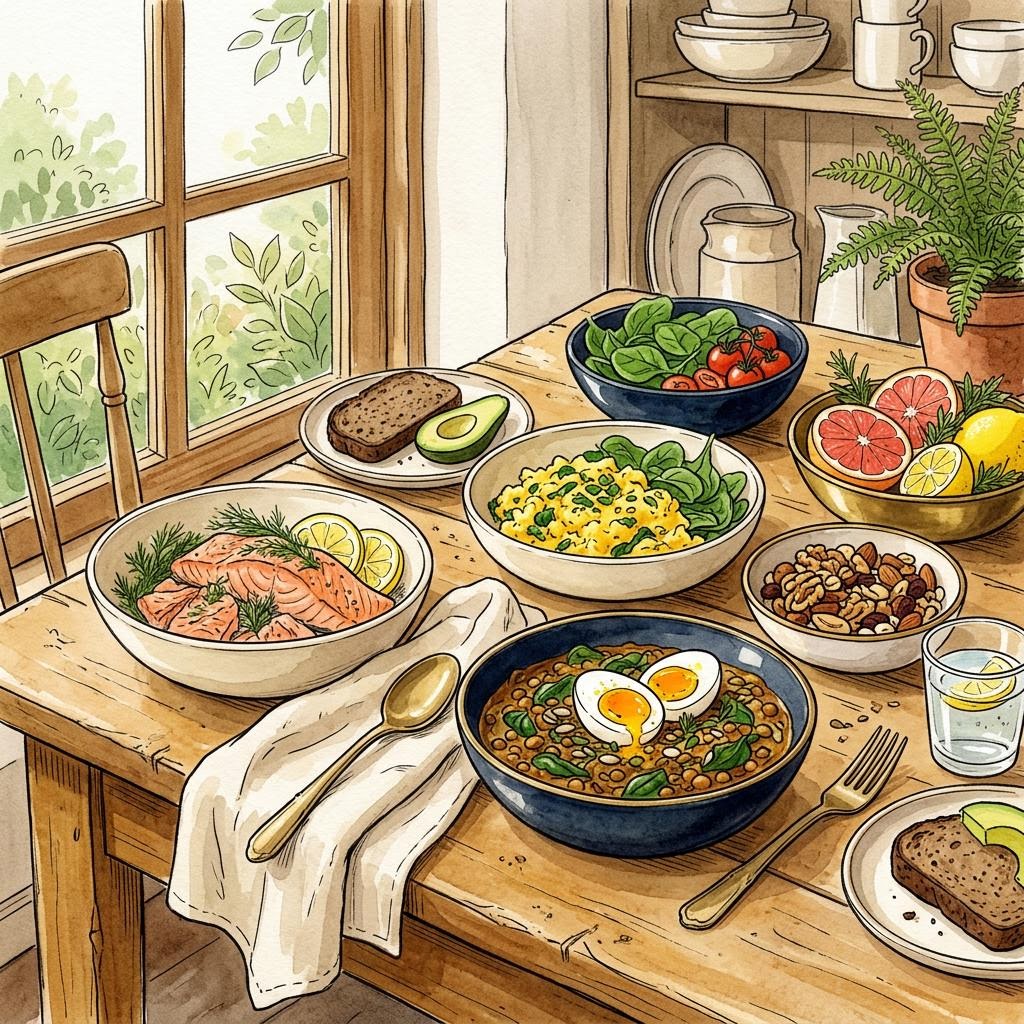
Eggs, fish, nuts, seeds, legumes, leafy greens and lean meat all contain nutrients relevant to hair. So does a generally varied diet. There is no food that meaningfully accelerates hair growth, and framing particular foods as solutions overstates what they do.
What is worth avoiding is the reverse: very restrictive diets, rapid weight loss and prolonged significant caloric deficit, all of which reliably trigger shedding.
The role of blood tests
The recurring theme is that testing beats guessing.
Reasonable initial investigations where diffuse shedding is present: full blood count, ferritin and iron studies, thyroid function, and vitamin D. Depending on history, other tests may be relevant.
This is a GP conversation. The value of knowing your levels is that it tells you what to correct and what to leave alone, which supplements cannot do.
See when hair loss isn't genetic.
What we would suggest
Eat adequately and variedly. Not for your hair specifically, but adequacy covers most of what nutrition can contribute.
Get bloods if you are shedding diffusely. Ferritin and thyroid at minimum.
Correct demonstrated deficiencies. Under guidance, and with follow-up testing.
Do not supplement speculatively. Particularly iron, zinc and vitamin A, where excess causes harm.
Do not expect nutrition to address pattern loss. If your hairline is receding or your part widening, that is a different process and needs assessing on its own terms.
Getting assessed
Examination under magnification can distinguish diffuse shedding, where nutrition may be relevant, from pattern miniaturisation, where it is not.
A GP referral is required before a cosmetic surgery consultation. Get in touch.
Related reading: how much hair loss is normal, do protein powders, creatine and steroids cause hair loss, hair loss treatments compared.
This article is general information only and is not medical advice. Any surgical or invasive procedure carries risks. Suitability, risks and outcomes vary between individuals and are assessed at an individual consultation. Before proceeding, you should seek a second opinion from an appropriately qualified health practitioner.
Discuss your own case
Whether any of this applies to you can only be assessed in person. A consultation with Dr Daood at the Bankstown clinic covers your suitability, the options, the risks and written costs.