
Everyday Habits That Damage Your Hair
Before the list, one distinction that makes the whole subject clearer.
Damage happens to the hair shaft. Heat, chemicals, friction and over-manipulation weaken keratin, causing breakage, split ends and hair that looks thinner because it is shorter and rougher, not because there is less of it. This is cosmetic and it grows out.
Loss happens at the follicle. This is what pattern hair loss, traction alopecia and medical causes affect, and it is a different problem with different consequences.
Almost everything on this list causes the first, not the second. That is worth knowing, because worrying about hair damage while ignoring genuine follicular loss is a common misallocation of attention.
1. Washing too often, or not often enough
There is no universal correct frequency. It depends on your scalp, hair type and what you put on it.
Shampoo removes sebum, the natural oil that protects the shaft. Washing daily with a strong detergent shampoo strips more than most hair needs, leaving it drier and more prone to breakage.
Washing too infrequently, on the other hand, allows sebum and product to accumulate, which for some people means irritation, flaking and itch. An irritated scalp is not a good environment for hair.
If your hair feels dry and breaks easily, wash less often or use something gentler. If your scalp is oily, itchy or flaking, washing more often is likely the answer.
One thing worth knowing: if you reduce your washing frequency, the amount of hair that comes out when you do wash will increase, because you are collecting several days' worth at once. That is not increased loss. See how much hair loss is normal.
2. Hot showers
Very hot water strips sebum more aggressively than warm water and can leave the scalp dry and irritated.
Warm rather than hot, and a cooler rinse at the end, is a small change with no downside.
3. How you dry it
Hair is at its most vulnerable when wet. The internal structure swells and the shaft is more easily stretched and broken.
Vigorous towel rubbing is the main culprit here. Squeezing and blotting achieves the same result without the friction. Microfibre or even a cotton t-shirt is gentler than a standard towel.
Heat drying compounds it. If you use a dryer, a lower heat setting, held further away, and stopping while hair is still slightly damp rather than bone dry, reduces the damage considerably.
4. Heat styling
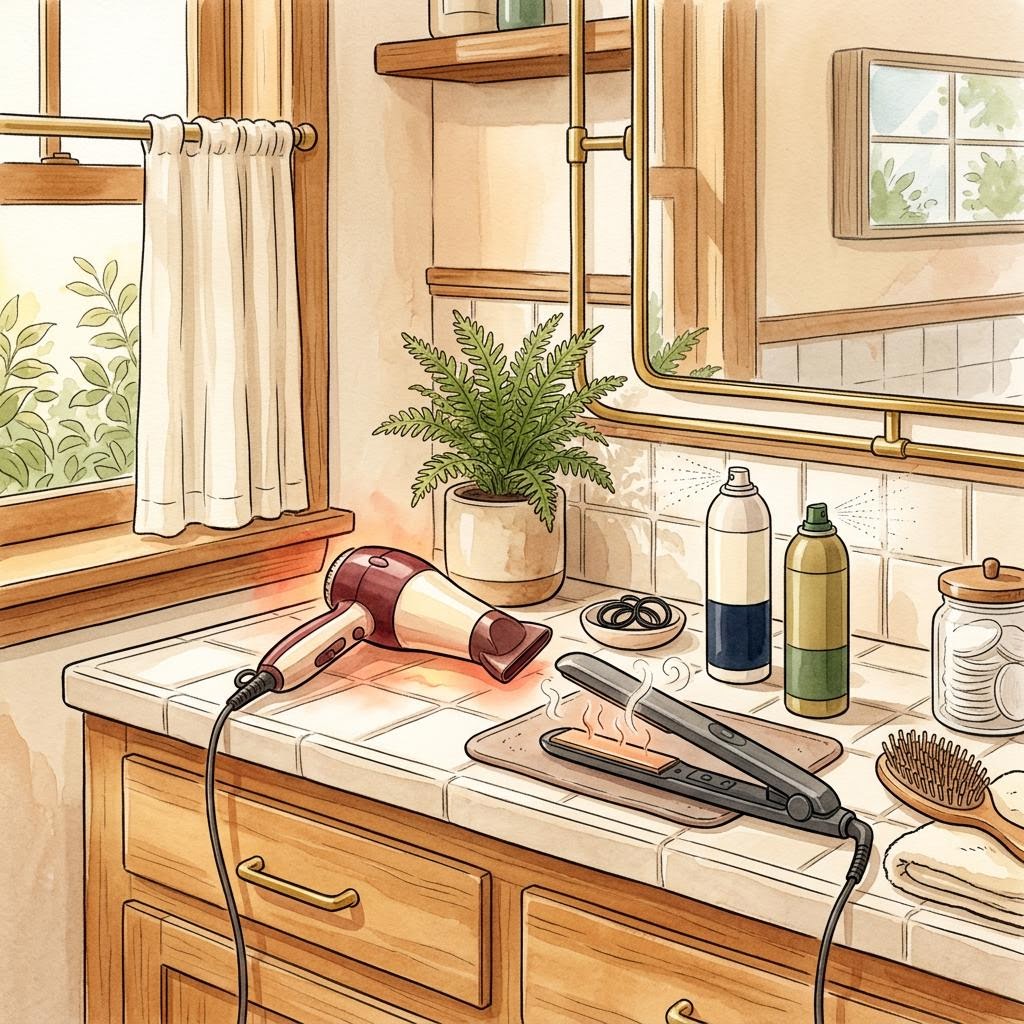
Straighteners and curling irons apply direct heat well above what keratin tolerates. Repeated use causes cumulative structural damage: roughened cuticle, weakened shaft, breakage.
If you use them, lower temperatures and less frequently. Heat protectant products do reduce transfer, though they do not eliminate it.
5. Chemical processing
Bleaching, permanent colour, relaxers and perms all work by altering the internal structure of the hair. That is the mechanism, so some damage is inherent rather than accidental.
Overlapping treatments, particularly bleaching over previously bleached hair, is where breakage becomes significant. Spacing treatments out and avoiding stacking different chemical processes matters more than which products are used.
Chemically processed hair is also less tolerant of tension, which is relevant if you also tie it back.
6. Tight hairstyles
This is the one item on this list that causes genuine follicular loss rather than shaft damage.
Sustained tension on the follicle causes inflammation and, if maintained long enough, scarring that destroys it permanently. This is traction alopecia, and it affects the hairline and temples first.
Unlike everything else here, this one does not grow out. Covered properly in traction alopecia.
7. Brushing, and when
Brushing wet hair causes more breakage than brushing dry hair, for the reasons above.
Detangling from the ends upwards rather than dragging from the roots down reduces the force applied. A wide-tooth comb on wet hair, a brush once dry, is a reasonable approach.
Brushing does not stimulate growth in any meaningful sense, despite the persistent belief. It distributes sebum and it detangles.
8. Chlorine and salt water
Chlorine is oxidising and strips protective oils. Salt water is dehydrating. Both leave hair drier and more prone to breakage, particularly with repeated exposure.
Wetting hair with fresh water before swimming reduces how much pool water it absorbs. Rinsing properly afterwards matters more than any product.
9. Stress
Worth including because the relationship is real but frequently misunderstood.
Severe physiological or psychological stress can trigger telogen effluvium, a diffuse shed appearing two to three months after the event. This is genuine, temporary, and recovers.
Chronic low-grade stress has a much less clear relationship with hair loss, and the popular claim that stress causes baldness overstates the evidence considerably. Stress does not cause pattern hair loss.
What stress does reliably influence is behaviour: less sleep, worse diet, and in some cases hair pulling, which causes its own pattern of loss.
10. Not investigating the actual cause
The most common mistake is treating the wrong thing.
Someone who is losing hair at the temples and crown, and who responds by buying thickening shampoo and reducing heat styling, is addressing shaft condition while follicular loss continues. Neither is wrong, but only one is relevant.
If your part is widening, your hairline is receding, or the hair regrowing is finer than what shed, that is follicular and worth having assessed. Products that improve shaft condition will make your hair look better without affecting the underlying process.
See how much hair loss is normal and when hair loss isn't genetic.
What actually moves the needle
If you were to change three things:
Stop tying it tightly. The only item here that causes permanent loss.
Be gentler when it is wet. Blot rather than rub, comb rather than brush, and let it dry a little before styling.
Establish what kind of loss you have. Damage and loss need different responses, and only one of them is time-sensitive.
Getting assessed
If you are unsure whether what you are seeing is breakage or genuine thinning, examination under magnification distinguishes them straightforwardly.
A GP referral is required before a cosmetic surgery consultation. Get in touch.
Related reading: diet and hair health, the hair growth cycle explained, seasonal hair loss.
This article is general information only and is not medical advice. Any surgical or invasive procedure carries risks. Suitability, risks and outcomes vary between individuals and are assessed at an individual consultation. Before proceeding, you should seek a second opinion from an appropriately qualified health practitioner.
Discuss your own case
Whether any of this applies to you can only be assessed in person. A consultation with Dr Daood at the Bankstown clinic covers your suitability, the options, the risks and written costs.